


I’ve been excited to see so many off the cuff party invites lately in the Columbus area. Powering that surge in events is Partiful, a sleek, fun, and completely free party invite platform. There’s nothing out there quite like it. However, I’ve seen enough from the tech industry to know that “free” almost never means “free.” We must be paying for it somehow, even if it’s not with money.
So, I set forth to figure out what Partiful’s angle is. Spoiler alert: it involves surveillance. I’m not trying to scare anyone; I’m just trying to see what’s going on and report my findings so you can make a decision for yourself about what to do when looking for how to host your next event.
Event Hosts and DJ’s: This is For You
If you’re running events or parties, I think that this topic is especially important for you because it’s more than just your own data. Everyone who you invite and everyone who RSVP’s could potentially be put at risk depending on what technology you use to manage your event. Whether Partiful is the right tool for the job, that’s your call.
Partiful is a Juggernaut; People Love It
I mean, why wouldn’t you want a way to host your casual hangout or larger, organized event where you can:
- List your event online for free
- Customize the landing page with themes, gifs, and playful UI
- RSVP management: guest lists, +1 tracking, waitlists, and capacity limits
- SMS text blasts! (No app downloads!)
- Group comment walls
- Pool money to order Instacart
- No account required for RSVP
The vibe is extraordinarily friendly. It’s fun, not corporate. With all of the above being completely free, the barrier to entry is extremely low. As with all social apps, there’s a network effect: once one friend uses it, the whole group follows.
Behind the Curtain: Who is Partiful?
Partiful was founded in 2019 by Shreya Murthy (CEO) and Joy Tao (CTO). If they had known a pandemic was coming, I wonder if they would have waited a few years. The duo met while working at Palantir Technologies.
For those not in the know, Palantir is a data-mining firm which The Cut credits with supporting the U.S. government’s surveillance efforts over American citizens. Wired also reports that Palantir provides technology for ICE’s deportation efforts. Meanwhile, The Nation explains how Palantir assists Israel in bombing Gaza.
So, what do Partiful’s founders have to say about this?
Shreya claims she was never a big fan of the whole government surveillance thing, and “consistently chose not to work on that side of the business”, focusing on private sector work. While she does express discomfort with Palantir’s dealings, Shreya downplayed the issue in her interview with The Cut. “Frankly, this is just not something that I see a ton of our users having concerns about.”
What Does Partiful Say About Privacy?
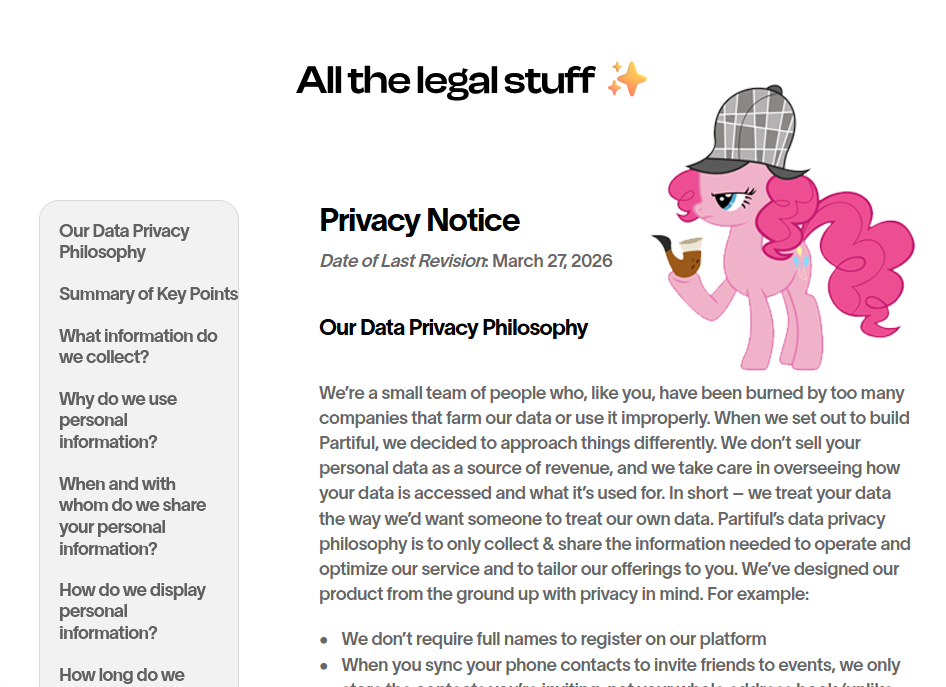
We can’t know what privacy means to Partiful, but we can at least hear what they have to say. The abstract of their Privacy Notice (revised July 28, 2025) reads:
We’re a small team of people who, like you, have been burned by too many companies that farm our data or use it improperly. When we set out to build Partiful, we decided to approach things differently. We don’t sell your personal data as a source of revenue, and we take care in overseeing how your data is accessed and what it’s used for. In short – we treat your data the way we’d want someone to treat our own data. Partiful’s data privacy philosophy is to only collect & share the information needed to operate our service. We’ve designed our product from the ground up with privacy in mind.
I saved a copy of the HTML of the privacy notice on March 27, 2026.
Data Partiful Collects
When provided or given the opportunity, Partiful collects:
- Phone number
- Full name
- Birthday
- Social media handles
- Profile photos
- IP address
- User agent
- Precise location data
- Information about how you use the service
Basically everything we’ve come to expect from a platform like this; I’m not surprised by this list. You should assume that every interaction you have with Partiful is tracked down to the finest detail just as you would with any other site like this. Additionally, they explicitly say that they don’t care about browser “do-not-track” signals.
What Does Partiful Say They Do With That Data?
On one hand, Partiful says “We don’t sell your personal data as a source of revenue”, while on the other their policy says:
We and our advertising partners may collect and use your personal information for marketing and advertising purposes, as permitted by law. You may opt out of our marketing communications, as described in Section 9 below. We do not sell your personal information.
My interpretation is: Partiful doesn’t sell your data, but they do hand it off to advertisers and use it for their own marketing. They describe that they have broad authority to use “de-identified” information for “legitimate business purposes”. Data is shared with vendors, analytics and ad tech services, performance monitoring tools, and law enforcement when legally required. They probably hold onto all that data indefinitely, as there’s no data retention policy mentioned.
A Gap Between Messaging and Policy
We can’t necessarily trust Partiful’s word at face value. Although the FAQ at the top of their privacy notice paints a privacy-friendly picture for us, the reality is muddy. “We don’t sell your data” is technically narrow; selling is only one way data can be monetized. Sharing that data with advertising partners and using it for marketing purposes is basically the same thing, even if it’s not a sale.
This isn’t really anything new or unique; Partiful isn’t the only one doing this. This gap is very common for tech companies.
What Are Critics Saying About Partiful?
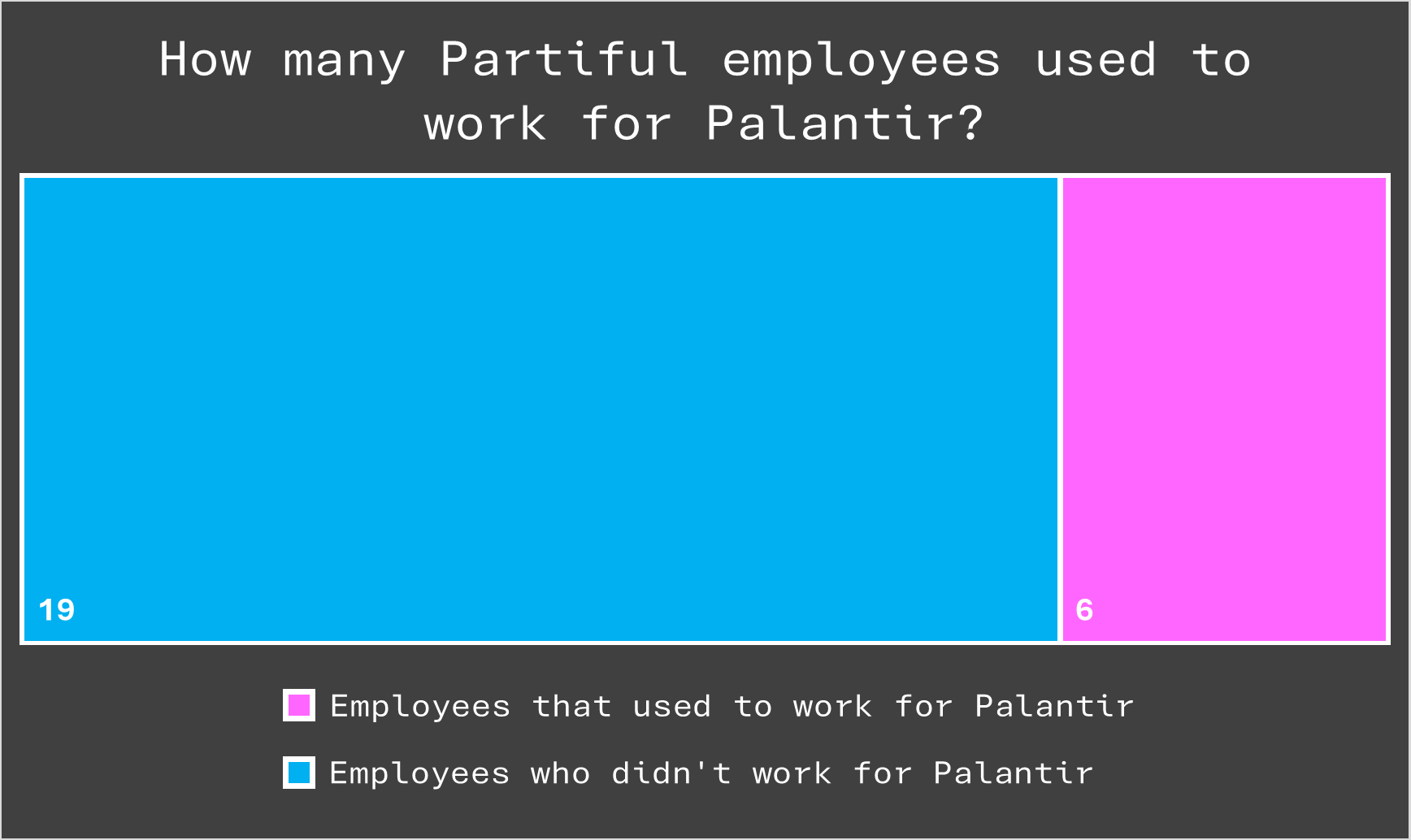
The most serious criticisms of Partiful come from their Palantir connections. Both founders worked at Palantir, as well as four additional known employees according to research by Jessica Hallock. That’s nearly a quarter of the company’s staff. Although Palantir has no known formal connections to Partiful, the founders’ history with the company begs questions about their values. The argument is: if Partiful’s staff have experience with surveillance, what’s stopping them from spying on you?
TechCrunch Caught Partiful Leaking GPS Coordinates
Inspired by Jessica Hallock’s criticism, TechCrunch reporters created a Partiful account to investigate. They quickly discovered that GPS data wasn’t being stripped from images uploaded to the platform. This would allow Partiful, and anyone able to see the image on the platform, to see the exact location where that image was taken. This could be used to identify where someone lives or works. TechCrunch alerted the founders directly, as there’s no official communication channel to report security vulnerabilities. Partiful quickly fixed the problem.
NYC Noise Boycott
I keep mentioning Jessica Hallock, a New York City promoter who runs the blog ‘NYC Noise’. She has a lengthy blog post (linked as a source earlier in this piece) detailing her research into Partiful’s Palantir connections. She calls for a boycott against Partiful, declaring that Partiful’s connections to surveillance are ethically incompatible with progressive and marginalized communities.
What Does Partiful Get Out of This?
One way to examine Partiful from a critical lens is to examine what they have to gain from their business.
Venture Capital
Right now, Partiful is funded by venture capital; investors pay them to operate. For a tech company at this stage, growth is more important than anything. Monetization can come later.
Group Order Fees
Partiful does take a small fee from Group Ordering from Instacart.
Social Graphs

The most valuable resource that they may be able to extract from Partiful are social graphs. This is relational data: who invites whom, who attends which event together, RSVP patterns, and group dynamics. They can use that data to build a web of who knows who, how, and why. That’s incredibly valuable and has been used by every social media site for decades.
Enshittification?
Later, when Partiful’s venture capital runs out, they’ll need to find new sources of revenue. Aside from advertising or selling social graphs to industry buyers or the government, they might follow after many other tech companies and try to monetize platform features that are currently free. This is speculation, but it’s what every SaaS company and their mother have done for years.
Aside from Partiful, What Are Your Options?
If you’re hosting events, large or small, Partiful is an option, but what about the others? There’s many to choose from that have a free tier or are completely free:
- Eventbrite: a more traditional ticketing and event manager.
- Luma: similar to Eventbrite, with a more modern design.
- Facebook Events: convenient if your circle is in Meta’s ecosystem.
- Mobilizon: a free and open source event manager with minimal tracking.
- Apple Invites: if everyone you know uses an iPhone and you have iCloud+, you may consider this.
From what I can tell, Partiful collects more data than paid alternatives like Eventbrite and Luma. However, we all know that Facebook Events can rival or exceed Partiful in terms of tracking. In terms of privacy, Mobilizon looks promising. It was designed for activism and can be self hosted so a community can take control of its data. However, it’s not exactly fun to use and requires some self hosting skills. I’m self hosting a test instance of the software; I think it could be functional, but it can’t rival what an enterprise can accomplish.
Should You Use Partiful?
I’m not really qualified to answer a question like this; I’m just a guy on the internet. My personal opinion is that I think I’d like to avoid Partiful from here on out if I can. It might be fine to use for casual events, or maybe just a one off event that isn’t at someone’s house. If you’re already using an app like Instagram or TikTok for organizing and attending events, it’s really not that much different.
My main concern is that if Partiful really does have a surveillance angle, then that could be pretty bad for people attending events in marginalized communities. If Partiful can identify events attended by activists, undocumented immigrants, political organizers, or a gender identity that the government doesn’t like, that data could be weaponized.
I also personally think that if you’re a promoter, you should want more control over the data you collect from your guest lists. Partiful doesn’t exactly let you do that right now as far as I’m aware. Moreover, you should consider what your attendees would want. Your choice in platform impacts everyone who might want to attend your events, not just your own personal preferences.
Attendees and Hosts: Consider OPSEC
If you are going to use Partiful and are concerned about your safety or privacy, you could try some of these approaches:
- Instead of granting Partiful access to your contacts, try adding guests manually.
- Strip photos of metadata before uploading.
- Use a second phone number for registration.
- Live in California or Europe? Regularly request data deletion if you can.
You’re the Catch

Partiful said it themselves: you’re hot, and they want your hot social graph. We don’t know the full scope of what Partiful is sharing with their advertising partners, and we don’t know what their long term monetization strategy is. We do know their background with surveillance based on their Palantir connections. Although their leaders may claim to disapprove of Palantir’s dealings, it’s up to you to decide you trust Partiful with the data of your attendees and registrants.
Leave a Reply